模版方法模式是设计模式中行为型模式的一种
模版方法模式就是定义一个算法的骨架
而将具体的算法延迟到子类中实现
优点与缺点
优点 :
    使用模版方法模式,在定义算法骨架的同时
    可以很灵活的实现具体的算法,满足用户灵活多变的需求
缺点 :
    如果算法骨架有修改,则需要修改具体抽象类
简单案例
实现一个计时类,能获取执行任意一段代码所花费的时间
那么需要在代码执行前记录一下时间
运行代码
在代码执行后记录一下时间
获取时间的差值
具体实现如下 :
1
2
3
4
5
6
7
8
9
10
11
12
13
14
15
16
17
18
19
20
21
22
23
24
25
26
27
28
29
30
31
32
33
34
35
36
37
38
39
40
41
42
43
44
45
46
47
48
49
50
51
52
53
54
| public abstract class TemplateMethod {
public abstract void code();
public long getRuntime(){
long start = System.currentTimeMillis();
code();
long end = System.currentTimeMillis();
return end - start;
}
}
public static void main(String[] args) {
TemplateMethod t = new TemplateMethod() {
@Override
public void code() {
testFor();
}
};
System.out.println(t.getRuntime()+"毫秒");
t = new TemplateMethod() {
@Override
public void code() {
copyAvi();
}
};
System.out.println(t.getRuntime()+"毫秒");
}
public static void testFor() {
for (int i = 0; i < 10000; i++)
System.out.println(i);
}
public static void copyAvi() {
BufferedInputStream in = null;
BufferedOutputStream out = null;
try {
in = new BufferedInputStream(new FileInputStream("a.avi"));
out = new BufferedOutputStream(new FileOutputStream("copy.avi"));
byte[] bytes = new byte[1024];
int len;
while ((len = in.read(bytes)) != -1) {
out.write(bytes, 0, len);
out.flush();
}
}catch (IOException e) {
e.printStackTrace();
} finally {
try {
if (in != null)
in.close();
if (out != null)
out.close();
} catch (IOException e) {
e.printStackTrace();
}
}
}
|
可以看到,只需要创建对应的子类即可灵活的套用骨架
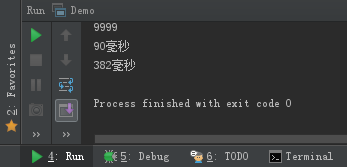
运行结果如下 :